Eye Movement Desensitization and Reprocessing in Tooele, Utah
Some memories never finish settling. Years go by, and a smell, a tone of voice, or a stretch of road still drops your body back into the moment it happened, heart racing, shoulders tight, as if no time has passed at all. That is not weakness and it is not a failure of willpower. It is a traumatic memory that got stored raw instead of filed away, and it is exactly the problem Eye Movement Desensitization and Reprocessing was built to solve.
Graceful Growth Clinic offers EMDR therapy at our office on Vine Street in Tooele, with certified clinicians who live in this valley. No forty five minute drive to Salt Lake. No waiting list six months long.
What Eye Movement Desensitization and Reprocessing Is
EMDR is a structured, evidence based form of psychotherapy developed by Dr. Francine Shapiro in the late 1980s. While walking one afternoon, Dr. Shapiro noticed that moving her eyes back and forth seemed to drain the emotional charge out of her own painful experiences. She spent the decades that followed turning that observation into a standardized eight phase protocol, now taught around the world through the EMDR Institute and other accredited training organizations.
What makes this reprocessing therapy different is what it does not require. You are not asked to narrate a traumatic experience in detail, week after week, until the story loses its grip. You are not sent home with worksheets about your thinking errors. Instead, you hold a distressing memory briefly in mind while your therapist guides your attention back and forth across your visual field, and the memory begins to lose its charge on its own.
You may see it written as eye movement desensitisation and reprocessing in British and Australian sources, or shortened to eye movement desensitization reprocessing. All three names describe the same treatment.

How EMDR Therapy Works in the Brain
The theory behind EMDR is called the adaptive information processing model. Under ordinary conditions, your brain digests what happens to you. Difficult days get sorted, sense gets made, and the event settles into the pile of ordinary life experiences you carry without effort.
Overwhelming events can interrupt that digestion. The memory stays stored the way it arrived, with the sights, sounds, body sensations, and beliefs of that moment locked in together. That is why a traumatic event from fifteen years ago can still feel present tense. Nothing has been processed. It has only been survived.
Bilateral stimulation appears to restart that stalled process. Researchers have drawn comparisons to rapid eye movement sleep, since the eye movements of REM sleep accompany the brain's nightly work of sorting experience, though the mechanism is still being studied and no single explanation has been settled. What clinicians observe consistently is that bilateral stimulation helps the brain reprocess material that had been stuck, so a distressing memory becomes something you remember rather than something you relive.

What Bilateral Stimulation Actually Looks Like
Most people picture a finger moving side to side, and guided eye movements are still the most common method. Your therapist may ask you to track their hand, a light bar, or a moving dot on a screen while you hold a target in mind.
Eye movements are not the only option. Bilateral stimulation also works through auditory tones alternating between your left and right ear through headphones, or gentle tactile pulses held in each hand. Clients who find sustained eye movements uncomfortable, or who have vision differences, get the same benefit from the alternatives. Your therapist will help you find the form of desensitization that feels workable for you.
The Eight Phases of EMDR Treatment
EMDR is not eight sessions. It is eight phases, and how long each takes depends entirely on what you bring in.
-
Phase one, history and planning.
Your therapist learns your background, identifies which memories to target, and maps out the work.
-
Phase two, preparation.
You build grounding and self regulation skills first. Nobody starts reprocessing until they can reliably come back to calm.
-
Phase three, assessment.
You choose one specific memory, along with the image, the belief about yourself attached to it, the emotion, and the physical sensations that come with it.
-
Phase four, desensitization.
Sets of bilateral stimulation while you hold the target in mind, checking in between sets. This is where emotional intensity begins to drop.
-
Phase five, installation.
A more accurate and more useful belief about yourself gets strengthened in place of the old one.
-
Phase six, body scan.
You check whether any tension or discomfort still lives in the body around that event, because trauma is stored physically as well as mentally.
-
Phase seven, closure.
Every EMDR therapy session ends with you settled and oriented, whether or not the target was finished.
-
Phase eight, reevaluation.
The next session opens by checking what held and what still needs attention.
What an EMDR Therapy Session Feels Like
Sessions usually run sixty to ninety minutes. You will not be hypnotized, you will not lose awareness, and you stay in control the entire time. If you want to stop, you stop.
Most of the session is quiet. Your therapist gives a set of bilateral stimulation, pauses, and asks what came up. You answer in a sentence or two. Then another set. Thoughts, images, and body sensations tend to shift on their own between sets, often in directions that surprise people. Some clients cry. Some feel nothing much until the drive home. Some describe the memory going flat and far away, still true but no longer loud.
Reprocessing can stir things up between appointments, and that is normal rather than a sign something went wrong. Your therapist will send you home with grounding tools and will not open a target you do not have the stability to close.
What EMDR Treatment Helps With
EMDR started as a trauma treatment and remains one of the most researched approaches to post traumatic stress disorder available. It appears in clinical practice guidelines from the World Health Organization and the Department of Veterans Affairs, and it has been recognized as an effective treatment by professional bodies including the American Psychiatric Association.
Its use has since widened well beyond combat and catastrophe. Clients at our Tooele office use EMDR for:
- Post traumatic stress disorder and complex trauma
- Childhood trauma, neglect, and attachment wounds
- Traumatic grief and sudden loss
- Anxiety disorders, panic, and phobias
- Depression rooted in unresolved traumatic stress
- Medical trauma, birth trauma, and postpartum distress
- Spiritual and religious trauma, including faith transitions
- Performance anxiety and low self worth carried since childhood
- Distress connected to a single traumatic experience such as a crash or assault
Trauma is not only the events that make the news. A childhood of being talked over counts. So does the accident nobody else remembers.
How EMDR Compares to Traditional Therapy
Traditional therapy in the talk based sense builds insight through conversation, and for many mental health concerns that is exactly the right tool. EMDR works differently, and the difference matters most when someone already understands their history intellectually but still reacts as though the trauma is happening now.
Cognitive behavioral therapy examines the thoughts that drive feelings and behavior, and it is well supported for anxiety and depression. Cognitive processing therapy, a trauma focused branch of that family, works through written accounts and structured challenges to stuck beliefs. Prolonged exposure therapy asks clients to approach the traumatic memory repeatedly until the fear response fades. Acceptance and commitment therapy builds psychological flexibility and values based action rather than arguing with thoughts at all.
EMDR asks for far less verbal detail than exposure based work, which is why it appeals to clients who cannot bear to narrate what happened, and why many find it a gentler entry point into trauma treatment. None of these approaches competes with the others. Our clinicians combine EMDR with cognitive behavioral therapy, acceptance and commitment therapy, internal family systems, and somatic tools depending on what each individual needs.
Why People in Tooele Choose EMDR Close to Home
For years, getting trauma informed mental health care in Tooele County meant I-80 and a ninety minute round trip. Reprocessing work is not something you want to do with a long, exhausted drive on the other side of it. Sessions land better when you can go home afterward, sit with what moved, and rest.
We are on Vine Street in downtown Tooele and we see clients from Grantsville, Stansbury Park, Erda, Lake Point, and across the valley. That local footing matters clinically as well as logistically. A therapist who understands shift work at the Tooele Army Depot, deployment cycles out of Dugway, the way privacy feels thin in a tight knit town, and what a faith transition costs a family here will hear your story faster than a stranger reading from a script.
Our EMDR Therapists in Tooele
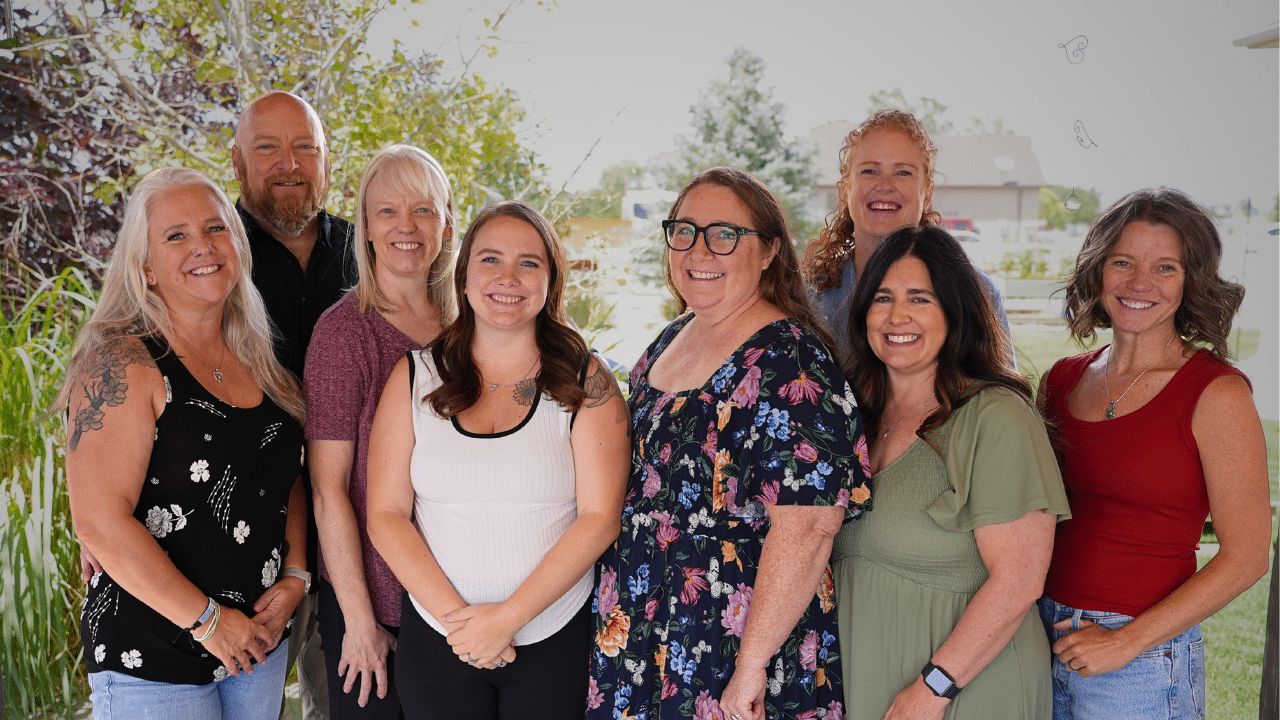
Several clinicians on our team are trained in EMDR, so we can match you rather than assign you.
Founder of Graceful Growth Clinic, EMDR certified, with years of experience supporting military families.
EMDR, teen and LGBTQ+ affirming care, and work with faith transitions.
EMDR and couples work, with evening and weekend availability.
If your first match is not the right one three sessions in, we will say so and move you. Finding the right EMDR therapist is part of the treatment, not a detail around it.
Is EMDR Right for You
EMDR is a strong fit if talk therapy has helped you understand your history without changing how your body responds to it, if you avoid places or reminders, or if you have been carrying something for years that you have never been able to say out loud.
It may not be the place to start if you are in active crisis, if you need more stabilization skills first, or if substance use is currently unmanaged. In those cases we build the foundation first and come back to reprocessing when it will hold. Your first appointment is an honest conversation about which treatment makes sense, and we will tell you plainly if EMDR is not the one.
Insurance and Cost
EMDR is billed as psychotherapy, so it is covered like any other mental health treatment under most plans we accept, including Select Health, Blue Cross Blue Shield, United Healthcare, Optum, Aetna, PEHP, Humana, GEHA, DMBA, Utah Medicaid, Utah Medicare Part B, and Tricare West Region. HSA, FSA, church paid coverage, and cash pay are all workable.
Tricare coverage matters in this county. Between Dugway Proving Ground, the Tooele Army Depot, and Guard families across the valley, a large share of our clients are military connected, and we know how those benefits work. Call (385) 409-0363 and we will verify your plan before your first appointment so there are no surprises.
Frequently Asked Questions About EMDR
How many sessions does EMDR take?
A single traumatic event can sometimes resolve in a handful of reprocessing sessions once preparation is done. Layered childhood trauma takes longer. Your therapist will give you a realistic estimate after the history phase rather than a number on day one.
Do I have to describe what happened?
No. You need to be able to bring the target to mind, but you are not required to narrate it. Many clients say very little out loud during desensitization, and the work still moves.
Is EMDR safe?
It is a well studied therapy with a strong safety record when delivered by a trained clinician. Temporary increases in emotional intensity or vivid dreams can happen between sessions, which is why preparation and closure are built into every phase of the treatment protocol.
Will I lose the memory?
No. Reprocessing does not erase anything. The memory stays, but the alarm attached to it quiets down, and you get to decide when to think about it.
Can EMDR help with anxiety rather than trauma?
Yes. Anxiety disorders, panic, and phobias often trace back to earlier experiences that are still driving the reaction, and EMDR can target those roots directly.
Does EMDR work for children?
Yes, with age appropriate adaptations. We see clients from age three and up, and shorter sets with more play based grounding are standard for younger kids.
How is EMDR different from just moving my eyes at home?
The eye movements are one component inside a structured eight phase protocol delivered by a licensed clinician. Without assessment, preparation, and closure, you are opening something with no plan for settling it. This is not a self help exercise.
Start EMDR Therapy in Tooele
Healing does not require you to relive the worst thing that ever happened to you. It requires the right process and someone steady sitting with you while your brain finishes work it started years ago.
Graceful Growth Clinic offers Eye Movement Desensitization and Reprocessing at 22 W Vine St in Tooele, Utah, Monday through Thursday from 9 AM to 7 PM, with appointments available seven days a week by arrangement. Most insurance accepted.
Call or text (385) 409-0363 to schedule, or request information and we will reach out.
(385) 409-0363